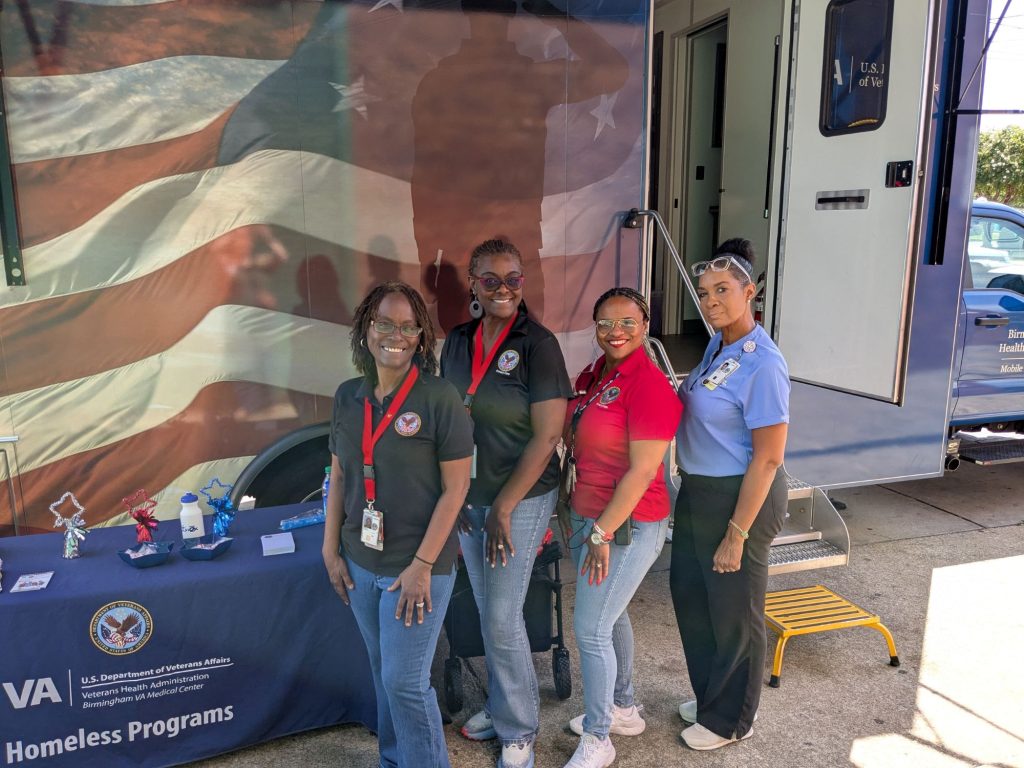
On a sweltering July day in downtown Birmingham, with the heat index soaring to 108 degrees, a small group of men and women gathered in the shade outside the Church of the Reconciler. For many, this wasn’t just a hot afternoon; it was an opportunity for hope.
Parked just steps away, the VA’s Mobile Medical Unit, operated by staff from the Phoenix Clinic at the Birmingham VA Health Care System, stood ready to provide immediate care to veterans experiencing homelessness or struggling to transition back into stable housing. More than a mobile check-up station, this state-of-the-art clinic on wheels represented a coordinated outreach effort to meet veterans where they are and connect them to long-term care and support.
Inside the air-conditioned unit, veterans were welcomed without judgment and without needing an appointment.
“If someone needs help, they can come right in. It’s a full mobile clinic. We don’t carry medications, but we have all the standard equipment for blood pressure, diagnostics and we can do the intake necessary to refer people to the VA for what they need.”
–Monnaka Speights, Nurse Practitioner and Intake Coordinator with the VA’s Health Care for Homeless Veterans (HCHV) program

The Phoenix Clinic is part of a national VA initiative to deliver primary medical care to veterans who are homeless or at risk of eviction. Services include physical exams, urgent care, diagnostic testing and referrals for specialty care. Onsite case managers also provide access to housing assistance, benefits enrollment, employment resources and mental health services.
Part of a National Surge to End Unsheltered Homelessness
This event was part of a broader initiative known as an unsheltered surge, a time-limited, high-intensity effort by the U.S. Department of Veterans Affairs to reduce the number of unsheltered veterans in targeted communities.
“The purpose of these surge events is to identify Veterans in immediate need of emergency housing and to expedite their placement while permanent housing solutions are being pursued,” shared Rocky Harrison, Vice President of Veteran Services for Priority Veteran, a United Way program in the Community Initiatives Department.
“This event served as a powerful example of how VA-funded programs support Veterans experiencing homelessness in our community and the coordinated efforts to connect individuals with the resources and support they need to move toward stable, permanent housing tailored to their unique circumstances.”
“To honor our local veterans for their service is to be there for them in their greatest hour of need. Partnering with the VA on this Surge Event demonstrated that no veteran is forgotten.”
–Erika Williams, Alabama Program Director for Priority Veteran
Unsheltered homelessness is one of the most dangerous and isolating situations a person can face. Unlike sheltered homelessness, which involves some form of temporary housing, unsheltered refers to sleeping outdoors or in places not meant for habitation — vehicles, tents, underpasses, abandoned buildings, etc. When a Veteran is unsheltered, there’s no time to delay getting them to a safe place and quickly on a path to permanent, stable housing.
While VA homeless programs work year-round to end homelessness among all veterans, unsheltered surges are designed to make direct, measurable and immediate impact. Key goals include same-day access to interim housing through programs such as Grant and Per Diem (GPD), Health Care for Homeless Veterans (HCHV) Program and Supportive Service for Veteran Families (SSVF) Emergency Housing Assistance, along with rapid connection to permanent housing resources such as HUD-VASH.
“The VA appreciates Priority Veteran and the SSVF program. Partnerships like these are essential to helping veterans return to a high level of functioning and achieve meaningful reintegration into the community.”
–Ahmad Brewer, Homeless Veterans Program Coordinator, VA Health Care System
United Way Priority Veteran offers veterans a path forward through intensive case management, housing search support, employment assistance and access to resources designed to promote long-term stability. In 2024, Priority Veteran served more than 700 veterans and their families, helping many go from homelessness to safe, stable housing.

For a veteran in crisis, the first step might be as simple as walking into the mobile clinic and saying, “I need help.” What follows is a coordinated effort to assess needs, restore dignity and walk alongside that veteran toward a better future. As in the military itself, no one is left behind.
Inside the church fellowship hall, dozens of VA staff, outreach workers and case managers worked side-by-side at tables draped in patriotic colors. Laptops hummed as veterans moved from station to station, receiving help with housing applications, job placement, public benefits and referrals for mental health or substance use treatment.
By bringing these services into community spaces, partners such as Priority Veteran and the VA are removing major barriers — especially for veterans without reliable transportation or internet access. Whether it’s at the Birmingham VA Health Care System, the Birmingham East VA Clinic or pop-up events such as this one, the message is the same: You are not forgotten and help is here.
“We’re here to meet people where they are,” said one VA nurse. “And sometimes that means setting up in a church parking lot with everything we need to get someone connected to care.”