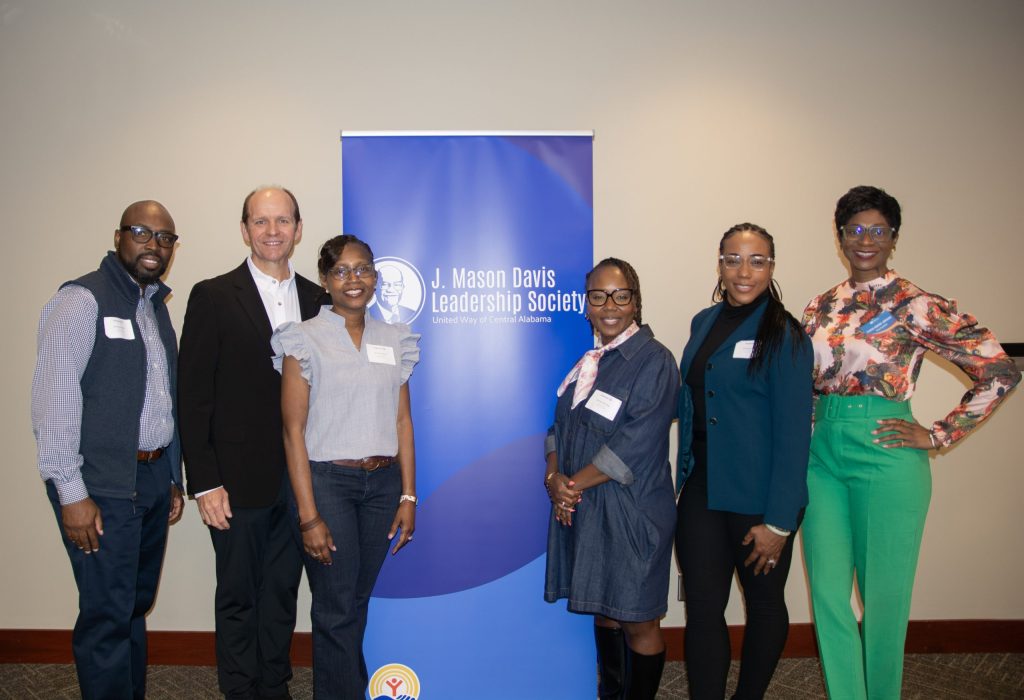
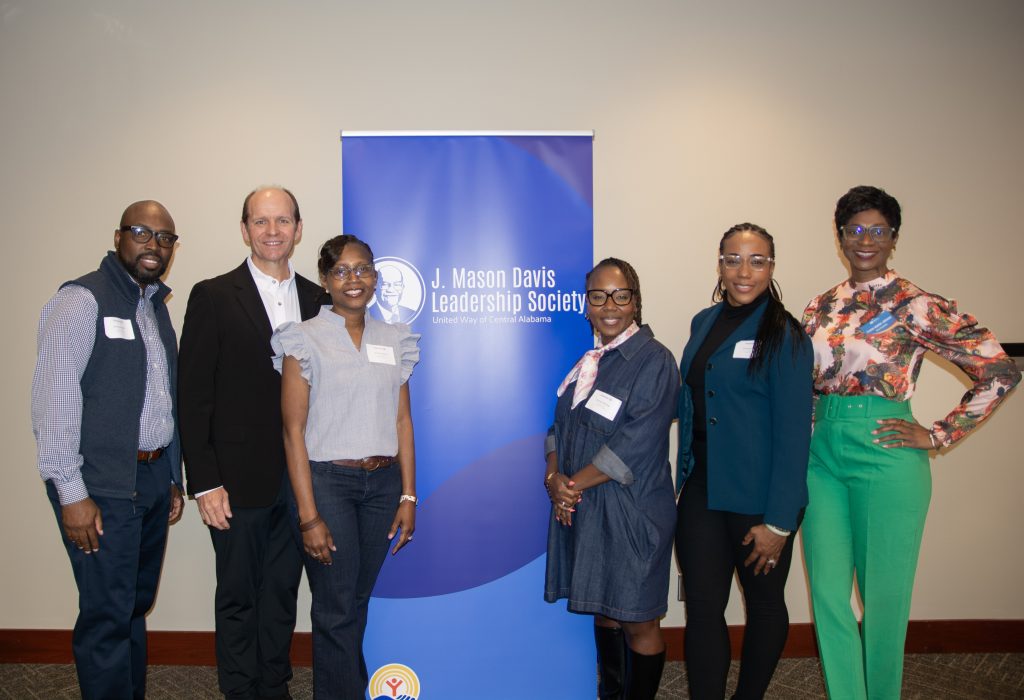
Local leaders recently gathered at Protective Life for the third annual “Meeting of the Minds,” a direct conversation about youth mental health — a growing concern in Central Alabama and in communities around the world.
J. Mason Davis Leadership Society, a donor network of United Way of Central Alabama (UWCA), hosted the event.
It brought together African American leaders committed to philanthropy, volunteerism and advocacy.
Lauren Christy, Behavioral Health Clinical Director at UAB St. Vincent’s East Behavioral Health, moderated the discussion, which focused on what local professionals are seeing in schools, counseling offices and homes.
“Anxiety is appearing earlier. Grief is often hidden. And identity is developing in public spaces,” Christy said.
What Professionals Are Seeing
Panelists included:
- Lauren Christy, Behavioral Health Clinical Director, UAB St. Vincent’s East Behavioral Health.
- Winnie Lowe Davis, District Mental Health Counselor, Simmons Middle School.
- Crystal Mullen-Johnson, CEO and Founder, Strive Counseling Services, LLC.
- Danna Perdue, Licensed Professional Counselor, Perdue Counseling.
- Jermaine Wall, Clinical Therapist, Crescent Counseling.
Together, they described students struggling with panic attacks in middle school, elementary-aged children who have difficulty regulating emotions. They also discussed teens who measure their self-worth against what they see online.
Wall addressed the role of technology in that pressure. “Connection is instant. Comparison is constant,” he said.
“The question is no longer, ‘Do you know where your children are?’ It’s, ‘Do you know who your children are online?’”
He explained that many young people now communicate more through screens than face-to-face, reducing opportunities to read social cues, resolve conflict and build trust with adults.


Early Stress, Long-Term Consequences
The panel also examined early childhood development. Brain growth between birth and age 5 sets the foundation for emotional regulation and decision-making. Repeated exposure to chronic stress — including family instability, community violence or neglect — can disrupt that development.
That may show up as difficulty concentrating in class, frequent outbursts or withdrawal from peers. Over time, untreated mental health challenges can affect attendance, academic performance and graduation rates.
And those negative outcomes don’t stop at the school door. Employers rely on graduates who can collaborate, manage stress and adapt to change. When those skills are underdeveloped, workforce readiness suffers.


Expanding Access Beyond the School Day
Panelists agreed that no single system can address youth mental health alone. Schools often serve as the first point of identification, but families, clinicians, faith leaders, nonprofit organizations and employers all play a role in reinforcing support.
Through its partner agencies and donor networks, United Way of Central Alabama continues investing in services that expand access to counseling, strengthen families and promote stability for children.